


0117 929 2104


Hazardous materials are present and used in all kinds of businesses, from laboratories to manufacturing sites and maintenance facilities. While many health and safety managers implement rigorous handling procedures, storing those materials safely can often be misunderstood or, in some cases, treated as a secondary concern.
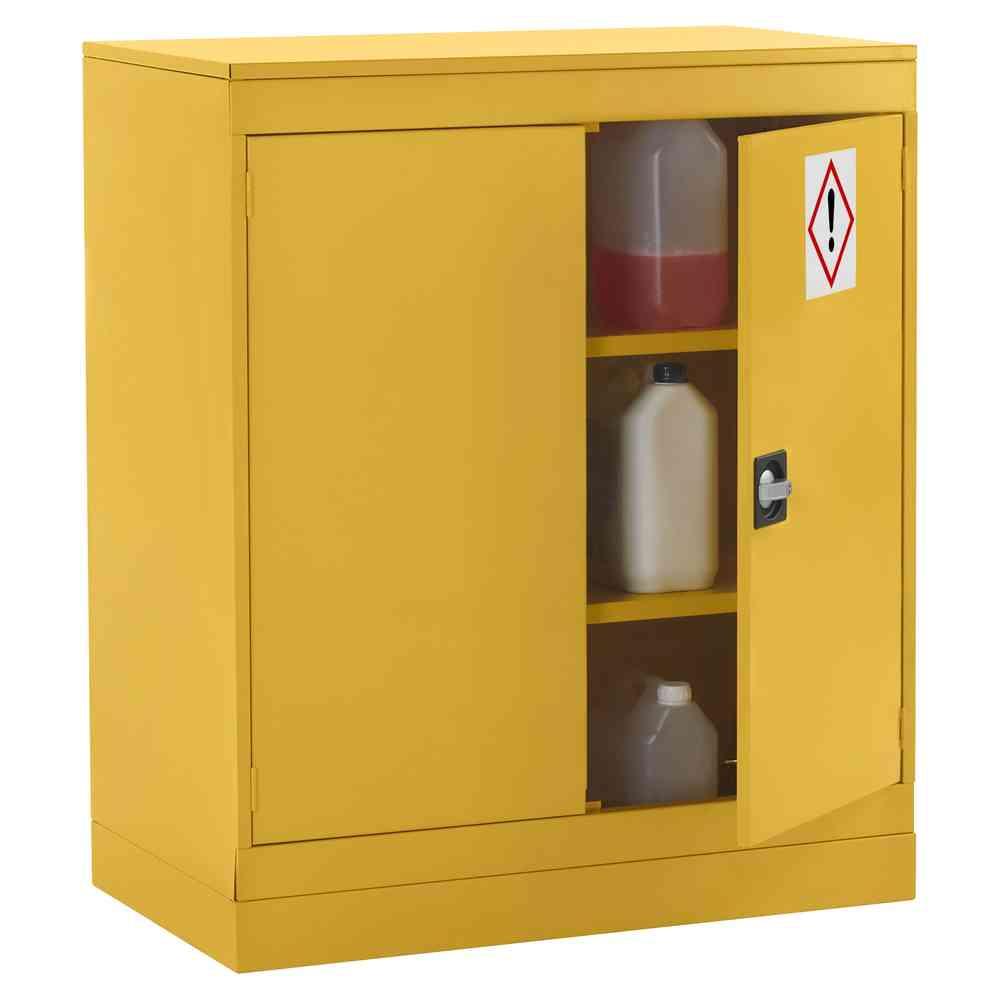
For organisations dealing with hazardous materials, investing in specially-designed hazardous storage, such as Probe hazardous storage cabinets, is an insurance-ready way to reduce risks and support safer, controlled working environments.
HSE statistics concluded that around 13,000 deaths a year in the UK are linked to past exposure to chemicals or dust at work. This staggering figure only reinforces the importance of safe chemical storage.
In this blog, we dive deeper into everything your business needs to know about storing hazardous materials. Read on for more information on operational requirements, compliance laws, safe storage options and risk assessments.
The risks of improper storage of hazardous materials
When hazardous substances aren’t stored correctly, the impact can be detrimental to safety and compliance. Poor storage decisions where harmful chemicals are concerned are likely to expose organisations to accidents, reputational damage and enforcement action.
- Exposure to leaks, spills and uncontained vapours can increase the risk of injury, disrupt day-to-day operations and create avoidable safety incidents.
- Spills can halt business operations, resulting in a loss of productivity and/or revenue while affected areas are assessed, cleaned and made safe.
- Failure to meet chemical handling safety regulations also leaves businesses open to enforcement action and scrutiny during inspections.
- Chemical and toxic substance leakage can lead to catastrophic fires, environmental contamination and long-term health complications.
- Storing incompatible chemicals may increase fire risk or release harmful gases.
- Incorrectly labelled and organised chemicals can cause confusion and inventory errors.
You can minimise these risks and meet health and safety guidelines with the protection of COSHH cabinets.
What the law expects from businesses storing hazardous materials
In the UK, there are multiple regulations covering chemical safety in the workplace, such as COSHH (Control of Substances Hazardous to Health) and DSEAR (Dangerous Substances and Explosive Atmospheres Regulations), alongside wider health and safety legislation.
These regulations are put in place to ensure employers carry out appropriate chemical storage risk assessments, putting controls in place to protect people and the surrounding environment from harm.
Here's what you need to know from a legal standpoint as a business handling chemicals and hazardous substances:
- Ensure hazardous substances are correctly labelled and clearly identified
- Organisations show due diligence by using designated storage solutions that minimise danger
- Attend safety protocol training courses and refresher courses when legislation changes
- Provide safety training to employees.
- Use protective gear (PPE) when handling chemicals.
Businesses should stay up to date with regulations and regularly carry out routine inspections and maintenance.
Safety practices for storing hazardous materials
Hazardous materials are classified into various categories based on their characteristics and the risks they pose. Therefore, it’s paramount that hazardous materials are correctly segregated according to their classification, using appropriate storage for different compounds and subdivisions.
Use purpose-built hazard storage cabinets
There are many precautions you are required to follow in the storage of chemicals and hazardous substances. You are best protected and more risk-averse when you invest in proper chemical COSHH cabinets, as they contain, separate and manage hazardous materials safely by design.
Make sure to use drip trays, sealed containers, and conduct regular checks for damage or corrosion.
Refer to the Safety Data Sheet
The Safety Data Sheet (SDS) is the go-to resource for managing and storing chemicals safely. Specifically, Section 7 outlines substance storage and provides advice on compliant storage practices. Section 10 specifies which substances can and cannot be stored together. Use this resource as your checklist, reviewing each section to sense check each product you store.
Labelling & signage
All packaging and containers holding hazardous substances need to be correctly classified and labelled. Clear markings of the name of each substance and relevant hazard symbols is paramount for both legal and practical reasons. This labelling process helps to uncover potential risks, categorise the right chemicals together and ensure all chemicals are stored in the most appropriate climate.
Labels must be present:
- Directly on the chemical container or packaging itself
- On the storage area - whether that's a cabinet or oil storage drum.
- On the door to the room where chemicals are stored
Ventilation & fire safety
Fire safety is a significant part of chemical storage, due to the possibility of chemical reactions when substances are improperly stored. Vapours slowly released by chemicals that are inadequately contained can increase health risks and ignition potential, particularly where airflow is limited.
Storing flammable liquids in fire-resistant cabinets are made to keep flammable substances safely contained, reducing the chances of fires spreading in the unfortunate event of a fire. It's advised that organisations take care to store flammable substances close by to extinguishers, away from heat and electrical sources.
How to find the right hazardous storage cabinets
| Cabinet type | Typical dimensions
(H x W x D) |
Best suited for |
| Compact hazardous cabinets | Approx. 595–770mm high, 300–450mm wide | Small quantities of chemicals or solvents where space is limited, such as under benches or in smaller work areas |
| Low hazardous cabinets | Approx. 790–1070mm high | Easy-access storage for regularly used substances in workshops, laboratories and maintenance rooms |
| Wide two-door cabinets | Approx. 790–1070mm high, up to 915mm wide | Broader storage for larger containers or multiple substances requiring separation |
| Tall hazardous cabinets | Approx. 1905mm high | High-capacity storage for larger volumes or multi-user environments where vertical space is available |
Find hazardous storage solutions at Safe Options
Here at Safe Options, we’re proud to stock some of the most trusted manufacturers of COSHH cabinets and hazardous storage solutions. As a leading supplier to organisations across a wide range of sectors, offering reliable storage for hazardous materials and other workplace equipment is our priority.
Browse a carefully curated selection of premium cabinets for different variations of chemicals, from brands such as Probe and Armogard - all available to be delivered at your convenience.

